By Stan Zaffos —
Hybrid cloud, the building of massive AI factories, user reliance on OpEx infrastructure and services, and market chaos are changing how IT supports the business and its rapidly evolving applications portfolio. These changes have expanded CIO responsibilities beyond technical decisions. Today, CIOs are expected to drive digital transformations, deliver measurable business value, and maximize flexibility while minimizing risks. Achieving these objectives requires more than money. It requires IT to rapidly synchronize its vision and investment plans with evolving marketing and sales strategies while maintaining shorter development cycles than its competitors.
But back to the subject of money and approvals of strategy changes. Years of costly digital transformation failures — missed deadlines, budget overruns, and under-delivered benefits — have made many Boards of Directors skeptical. While Directors still want to support innovation, they need a rationale wrapped in a compelling story to give them enough confidence to say yes to IT’s “asks”.
This article offers practical guidance on presenting those “asks” to the Board. It focuses on structuring your presentation and delivery to align with how directors evaluate risk, allocate capital, and make strategic decisions.
Understand Your Audience
An organization's Board is responsible for high-level oversight and strategic decisions. Its members are typically time-constrained, outcome‑oriented, focused on governance, risk, return on investment, and long‑term value creation - not operational details.
Because many directors were not selected for their IT expertise, they often need context before they can make informed decisions. This means that you should translate your Board “asks” into business and financial impacts such as revenue protection, cost avoidance, risk reduction, operational resilience, or competitive advantage—rather than dwelling on technical details. Researching directors’ backgrounds can help you anticipate questions, identify areas of interest or concern, and decide what belongs in the main presentation versus backup materials. Is a director a current or former company founder, CEO, CFO, engineer, salesperson, VC, or something else? Done well, this preparation reduces wasted effort and increases your credibility.
Your objective in a board presentation is to inform, persuade, and enable a decision. Expect questions to be probing; so, design your presentation to encourage dialogue rather than one‑way lecturing.
How Boardroom Presentations Are Different
- Boardroom presentations are different from typical executive or operational briefings because:
- They are infrequent events. You may only have one opportunity to frame “asks” correctly.
- The audience is diverse. You are speaking to leaders outside your functional domain.
- The cost of failure is real and costly. Lack of buy‑in can delay strategy, funding, or execution for months.
In this high-stakes scenario, leaving yourself enough time to practice your presentation, ideally to a friendly but critical audience, and make revisions is more than a best practice; it is effective risk mitigation. To quote Alexander Suvorov, one of Russia’s most successful military commanders, “Train hard, fight easy”.
Why Boardroom Presentations Fail
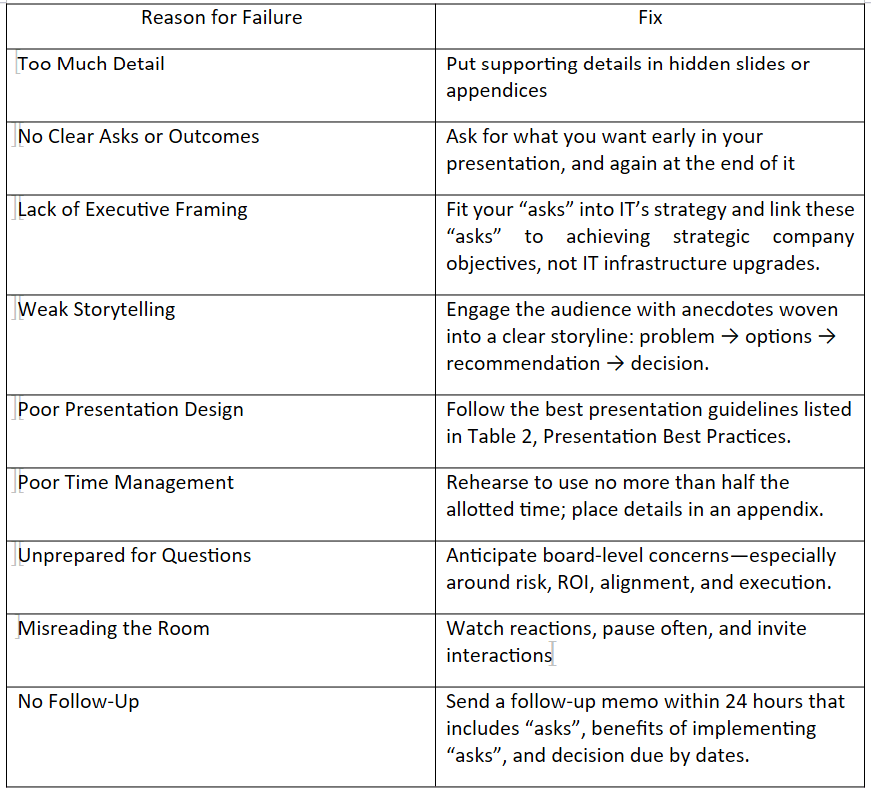
Table 1 shows the most common reasons for failing to achieve Board support of IT’s vision and spending plans.
Table 1 Reasons for Failure and Fixes
Presentation Design Best Practices
Boardroom presentations, like all other presentations, benefit from following the best practices.
Table 2 Presentation Best Practices
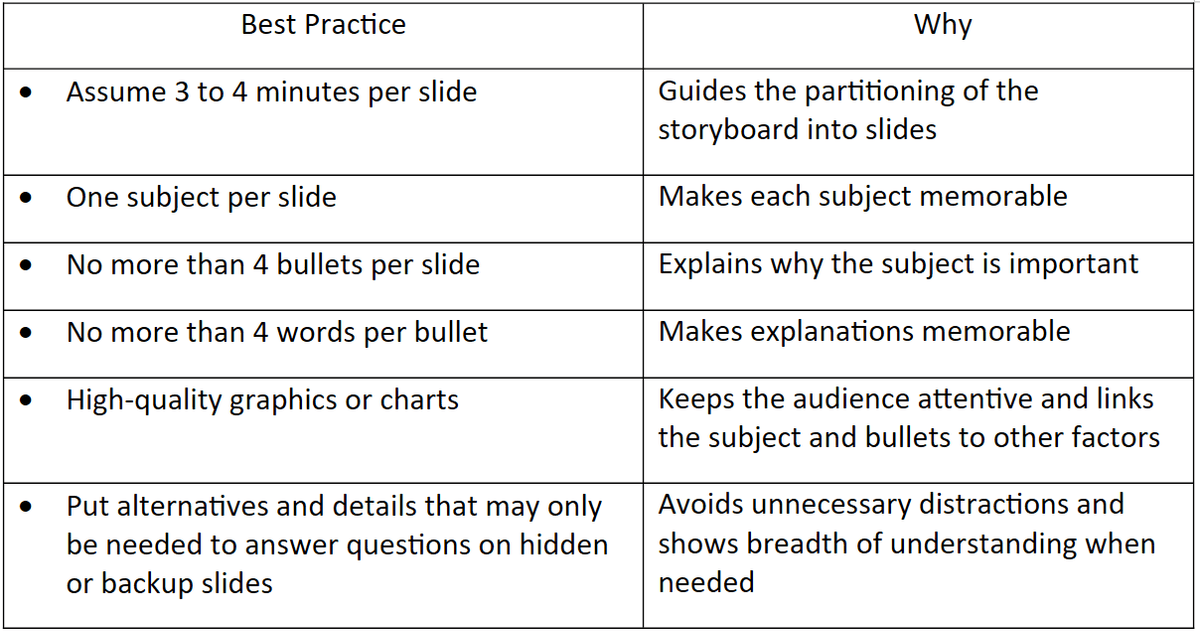
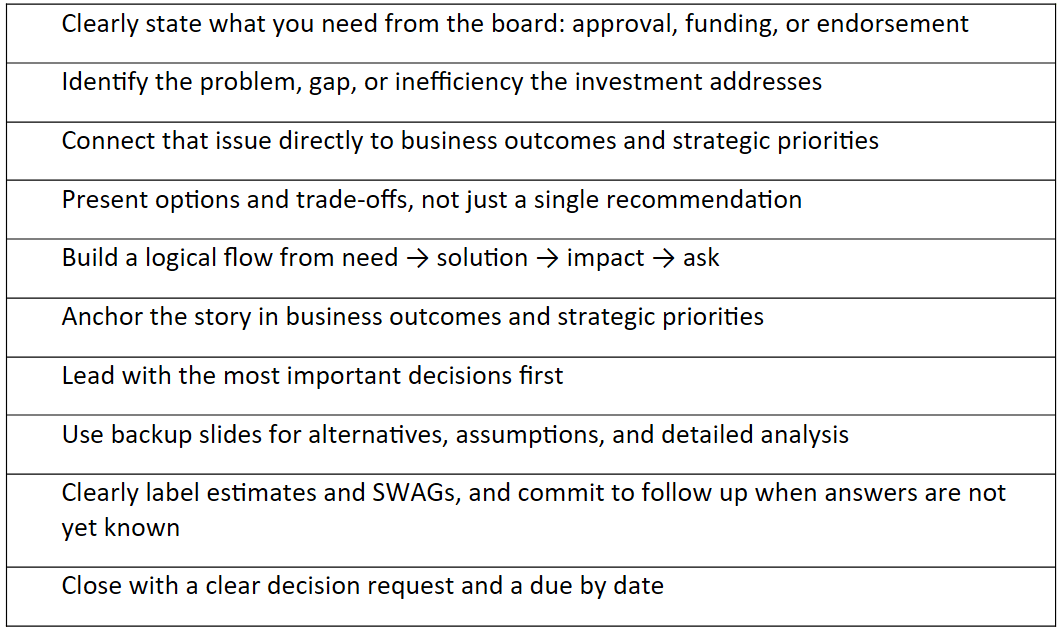
A clear storyboard paired with presentation design best practices forces discipline, sharpens the narrative, and keeps the discussion focused on decisions rather than details. Ensuring that your presentation complies with the storyboard checklist in Table 3 below improves your odds of the Board approving your “asks” because it directly eliminates the most common reasons for presentation failures.
Table 3: Boardroom Presentation Checklist
Conclusion
Winning board support for IT’s vision and investment strategy is less about technology and more about leadership, clarity, and trust. When you frame initiatives in terms of strategy, risk, and value—and make it easy for directors to decide—you dramatically increase the likelihood of approval and long‑term support.
----- ----- ----- ----- ----- ----- -----
Byline
Stanley Zaffos is an Advisor at Lionfish Tech Advisors, Inc.
----- ----- ----- ----- ----- ----- -----